Heat Stamping Machine All in One
Description
Technical Parameters
The purpose of a heat press is to effectively transfer designs onto various substrates.By applying high temperatures and significant pressure over a specified duration, a heat press ensures that transfers become permanently embedded into the product.
Why Choose Us
Our factory
Our own Huansheng Science and Technology Park is with over 10,000 square meters and more than 120 workers. Worked in vinyl cutter industry since year 2004 and developed the brands "MYCUT" & "TALENT" from year 2015, MYCUT vinyl cutters are well known all over the world with integrated design carriage head & honeycomb aluminum structure, which assure the highest precision and reliability.
Production equipment
Our factory testing machines are Withstand Voltage Leakage Tester, Vibration Tester, CCD High-definition Electron Microscope, Push-pull Force Test Bench, Level 00 High-precision Marble Platform, Square Ruler and Triangle Ruler, Other Digital Display Sizes Inner Diameters and Outer Diameters, Infrared Thermometer, Decibel Meter, 2D Measuring Instrument, Simulated Transportation Shaker, QUV Ultraviolet Aging Test Machine, Power Aging Cabinet, Constant Temperature and Humidity Aging Cabinet and Drop Test Machine.
Our certificates
All of MYCUT screen protector cutting machines and cutting plotter are with CE and RoHS certificates, and FCC compliant. Our factory complies with ISO9001: 2015 quality control as the production standards.
Quality control
QC department works on manual raw materials quality inspection, in-production quality inspection and finished product inspection, triple times quality control makes our screen protector cutter machine more reliable.

Heat Stamping Machine All In One
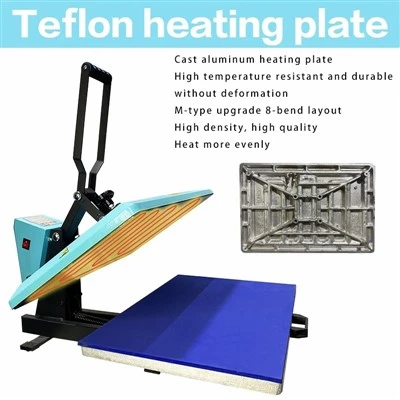
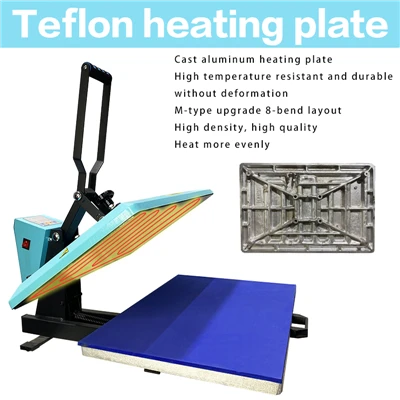
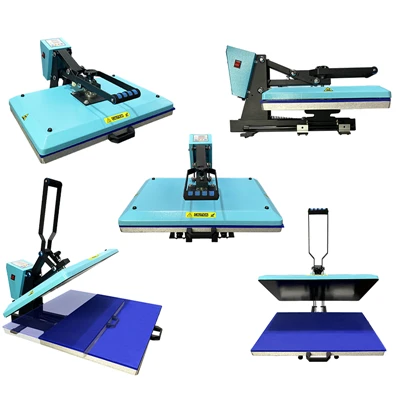
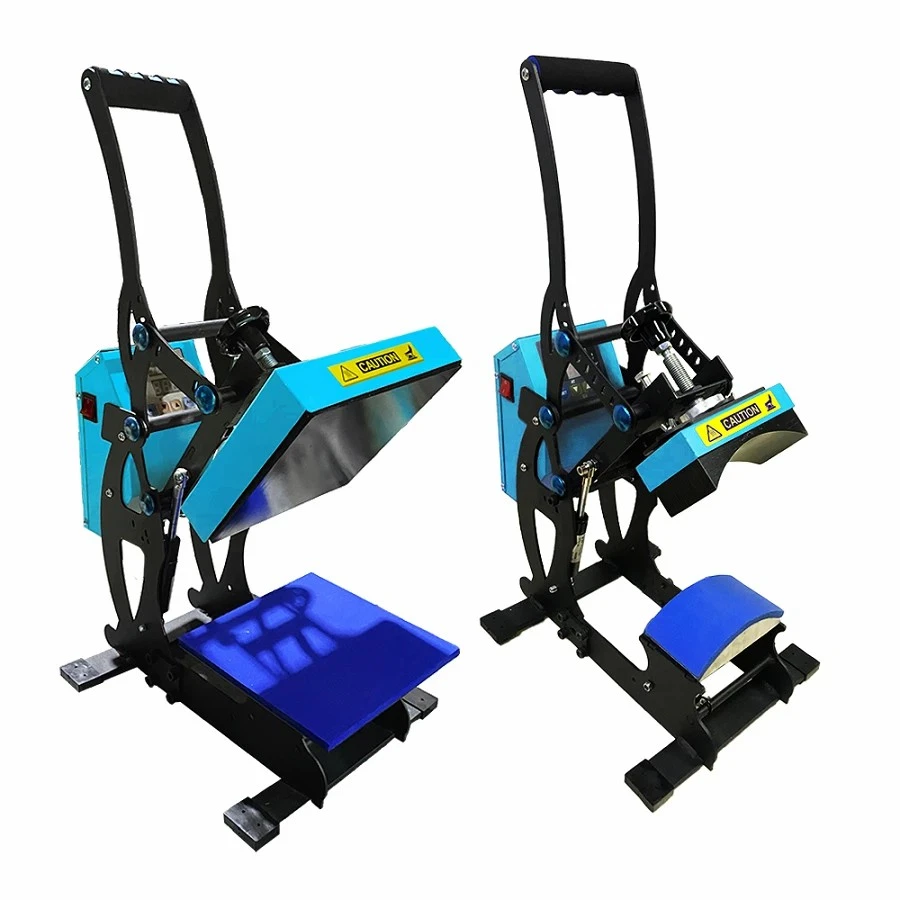
Certainly! Here's a revised version of the features list: 1. Precise digital time and temperature controls for accurate operation. 2. Upper platen coated with non-stick Teflon for easy cleaning and maintenance. 3. Compact clamshell design to optimize space and facilitate effortless operation. 4. Leveraged pressure system designed to enhance efficiency and reduce user exertion. 5. Adjustable pressure settings to accommodate a variety of materials and thicknesses. 6. User-friendly interface with easy handling, programming, and operation for seamless use.
Hot Foil Stamping Machine Types and How They Work
There are three types of hot foil stamping machinery, and each is used for different purposes. We'll discuss these types below.
Flat-flat foil machines: The dies are attached to flat metal or honeycomb-shaped plates depending on whether they're being used in variable or fixed positions. The foil and the medium are placed between the machinery plate and a counter-plate that's positioned underneath. In embossed foiling applications, the counter-plate forms the design when the top and bottom plates are brought together. These machines are simple to set up and parts are widely available.
Round-flat hot foil stamping machines use rotating cylinders instead of flat counter-plates. Horizontal pressure is applied across the cylinder, pressing the foil into the medium and transferring the design. This type of machine is best for small jobs.
Round-round stamping machines work much like printing presses. Cylinders on either side of the machine rotate in opposing directions. The medium and the foil are brought between the cylinders where they're pressed together under high heat. This type of machinery can rotate at high speeds and is often used to create intricate designs.
Hot Foil Stamping Methods
There are two foil stamping methods in use today: traditional and digital.
In the traditional method, the design is first etched or engraved into a metal plate called a foiling die. With pressure and heat the design is pressed into the medium. In multi-colored designs, separate foiling dies are used; embossing requires the use of special foil dies.
Digital hot foil stamping machines are like traditional machines as far as appearances are concerned. There's one major difference: the way the foil is affixed to the medium. In digital stamping, graphics are printed onto media using special sticky foils. It's like ink printing, in that it doesn't require separate machine runs for different designs and colors.
The process of hot foil stamping using a hot foil stamping machine typically involves the following steps:
Preparation : Begin by preparing the design or artwork that you want to hot foil stamp. This design is typically created as a raised pattern or text on a stamping plate or metal die. The stamping plate can be made by etching or engraving the desired design onto a metal surface.
Setup : Mount the stamping plate or metal die onto the hot foil stamping machine. Ensure that it is securely fixed in place and aligned correctly for accurate stamping.
Foil Loading : Load the foil onto the machine's foil feeding system. The foil is usually wound on a spool and is fed into the machine during the stamping process. Ensure that the foil is properly positioned and aligned with the stamping plate.
Heating : Turn on the heating mechanism of the hot foil stamping machine. The heating elements, such as heated plates or heating rods, will warm up to the desired temperature. This temperature is necessary to transfer the foil onto the substrate.
Stamping : Activate the hot foil stamping machine. It will bring the stamping plate or metal die into contact with the foil and the substrate. The machine applies pressure to ensure proper adhesion and uses heat to transfer the foil onto the substrate. The pressure, heat, and dwell time may vary depending on the specific machine and materials being used.
Coopng and Release : After the stamping process is complete, the machine releases the pressure and separates the stamping plate or metal die from the substrate. Allow the stamped area to cool before proceeding to the next step.
Foil Removal : Peel away the excess foil from the stamped substrate. Only the areas where the stamping plate or metal die made contact with the foil will retain the transferred foil.
Finishing : Inspect the stamped substrate for quantity and accuracy. Trim or further process the stamped material as required for the specific application.
It's important to note that the specific steps and procedures may vary depending on the type and model of the hot foil stamping machine being used. Always refer to the manufacturer's instructions and guidelines for proper operation and safety precautions.
What Types of Things Can a Heat Press Be Used For?


A heat press can deliver a range of practical uses and offers itself as a highly adaptable piece of equipment that can open up new product channels and increased functionality for a printing business.
Essentially, it will heat things up and press them, but it forms an integral part of many different processes, making it one of the most valued and versatile pieces of kit that any printing business should own.
A heat press can be used for sublimation
We've already covered the many different uses and benefits of sublimation and sublimation printing. Dye sublimation is a specific method that involves using specialized inks that are printed onto paper via a transfer. This transfer is heat pressed onto a poly-coated substrate or a polyester garment.
A heat press can be used for vinyl
When you see names and numerals printed onto sports T-shirts and other such garments, these are often done with a heat press.
A heat press can be used for decorated patches
By using a heat press, any decorative patch or screen that is printed can be heat sealed onto a product or fabric of your choosing. A sublimated patch is an ideal solution for those looking to use a design with many colors. So, when screen printing or embroidery isn't going to work, you can simply put the design onto a sublimated patch and heat seal it in a press.
A heat press can be used for screen-printed transfer
Screen printing has surged in popularity, but it comes with a high set-up cost and a need to know specific skills in order to get things right. Thankfully, there is an alternative solution that gives you the ability to offer screen-printed items without having to do any screen printing yourself – plastisol transfers. This process simply involves using a transfer, having a garment to embellish, and of course, a heat press.
A heat press can be used for rhinestones
Rhinestone transfers are another way a heat press can be used, preventing you from having to buy rhinestones or place them onto a garment or item by hand.
Here is what you will need to begin working with a heat press:
- The Heat Press Machine
- A Plotter (for cutting vinyl if you plan to use vinyl)
- Substrates of Choice
- Artwork and Designs of Choice
- Transfers or Vinyl of Choice
- Heat Press Accessories
- The Heat Press Machine
There is a wide array of heat presses available. They come in different sizes, different configurations, and with different functions and features built in. There are presses that work best for the fronts of t-shirts, presses for hats, presses for doing tagless labels, and even large format presses for doing signs or large art prints. We are happy to talk you through the various options, but ultimately, it comes down to the substrates you will be customizing. Many heat presses also feature a swappable lower platen. With these presses you can print the front of shirts, bags, mouse pads, shoes, sleeves, tagless labels, coasters, coated metal blanks, and so much more all by quickly swapping out the lower platen.
Another thing to consider when choosing a press is the quality of the machine. It's possible to find heat presses online for as low as $300-400. These presses might be okay if you simply plan to decorate the occasional t-shirt with very simple iron-on graphics, but they are not much better than using an iron by hand. A professional-grade heat press will likely cost at least $2,000. At that price point you should get a press that will last decades, have extremely even heat and pressure across the platen, and be able to handle top-grade transfer types similar to what you'd find on high-end, branded apparel or other quality products.
A Plotter
Based on the size of your chosen heat press and the anticipated volume of your production, a durable vinyl cutter can help streamline your customization process. Whether they are employed for customizing apparel or other merchandise, plotters are easy to use and add precision to your designs.
Substrates of Choice
As previously discussed, heat presses can print on a wide variety of materials. That being said, some materials have a steeper learning curve and may be tough for beginners to master. Waterproof fabrics, moisture-wicking fabrics, neoprene, and certain other synthetics can be sensitive to heat. They might also not adhere with the transfer as readily. Materials that are easier to work with starting out include cotton, nylon, polyester, Lycra, leather, and wood.
Artwork and Designs of Choice
Designing your artwork is the most creative part of using a heat press. Depending on the type of transfer you're working with, images with unlimited colors and designs can be pressed onto your substrates. Adobe Illustrator and CorelDraw are two common types of software that are used to create and process graphics that will be made into heat transfers. If you are sending your designs out to a transfer manufacturer to have them made for you, your manufacturer of choice will likely provide you with the requirements in terms of file types, colors, and so on.
Transfers or Vinyl of Choice
There are a number of different ways to create the transfers you will use with your heat press. Heat transfer vinyl is popular and so is utilizing white toner or dye-sub printers to print your own transfers onto paper. You can also purchase screen-printed transfers from a manufacturer or direct to film transfers from a shop with a DTF setup. Once again, your choices will likely depend on your chosen substrate and your designs. Certain types of transfers are limited in terms of the number of colors or in terms of the materials they will adhere to. Different types of transfers also have different quality and durability levels.
Heat Press Accessories
Additional accessories for your heat press could include Teflon sheets, Teflon covers, high-temperature grease to maintain your machine, accessory platens, heat tape, and pellon paper. All of these items could become useful as you delve further into what is possible with your machine.
Our Factory
MYCUT is a leading brand for screen protector cutting machine under Huansheng Intelligence (Shenzhen) Co., Ltd. We are National High-Tech Enterprise located in the city of design-Shenzhen in South China and passes ISO9001:2015 authentication. Our own Huansheng Science and Technology Park is with over 10,000 square meters and more than 120 workers. Worked in vinyl cutter industry since year 2004 and developed the brands "MYCUT" & "TALENT" from year 2015, MYCUT vinyl cutters are well known all over the world with integrated design carriage head & honeycomb aluminum structure, which assure the highest precision and reliability. All of MYCUT screen protector cutting machines and cutting plotter are with CE and RoHS certificates, and FCC compliant. Our factory complies with ISO9001: 2015 quality control as the production standards.

FAQ
Hot Tags: heat stamping machine all in one, China heat stamping machine all in one manufacturers, suppliers, factory, Metal Cutting Dies for Card Making Leather Cutting Mat Kraft Paper Roll Cutter, cutting dies for card making, leather cutting mat, craft cutting machine, laser cutter crafts, Best Paper Cutter for Scrapbooking Craft Cutting Dies Card Making Plotter
Previous
No InformationNext
16x20 Heat PressSend Inquiry