16x20 Heat Press
Description
Technical Parameters
A 16x20 heat press is a machine commonly used for applying heat transfers onto various items such as t-shirts, mugs, plates, and other flat surfaces.
Why Choose Us
Our factory
Our own Huansheng Science and Technology Park is with over 10,000 square meters and more than 120 workers. Worked in vinyl cutter industry since year 2004 and developed the brands "MYCUT" & "TALENT" from year 2015, MYCUT vinyl cutters are well known all over the world with integrated design carriage head & honeycomb aluminum structure, which assure the highest precision and reliability.
Production equipment
Our factory testing machines are Withstand Voltage Leakage Tester, Vibration Tester, CCD High-definition Electron Microscope, Push-pull Force Test Bench, Level 00 High-precision Marble Platform, Square Ruler and Triangle Ruler, Other Digital Display Sizes Inner Diameters and Outer Diameters, Infrared Thermometer, Decibel Meter, 2D Measuring Instrument, Simulated Transportation Shaker, QUV Ultraviolet Aging Test Machine, Power Aging Cabinet, Constant Temperature and Humidity Aging Cabinet and Drop Test Machine.
Our certificates
All of MYCUT screen protector cutting machines and cutting plotter are with CE and RoHS certificates, and FCC compliant. Our factory complies with ISO9001: 2015 quality control as the production standards.
Quality control
QC department works on manual raw materials quality inspection, in-production quality inspection and finished product inspection, triple times quality control makes our screen protector cutter machine more reliable.


Heat Stamping Machine All In One
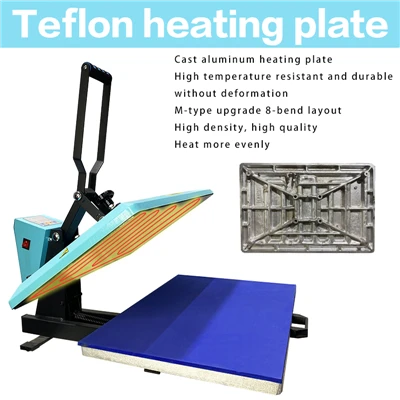
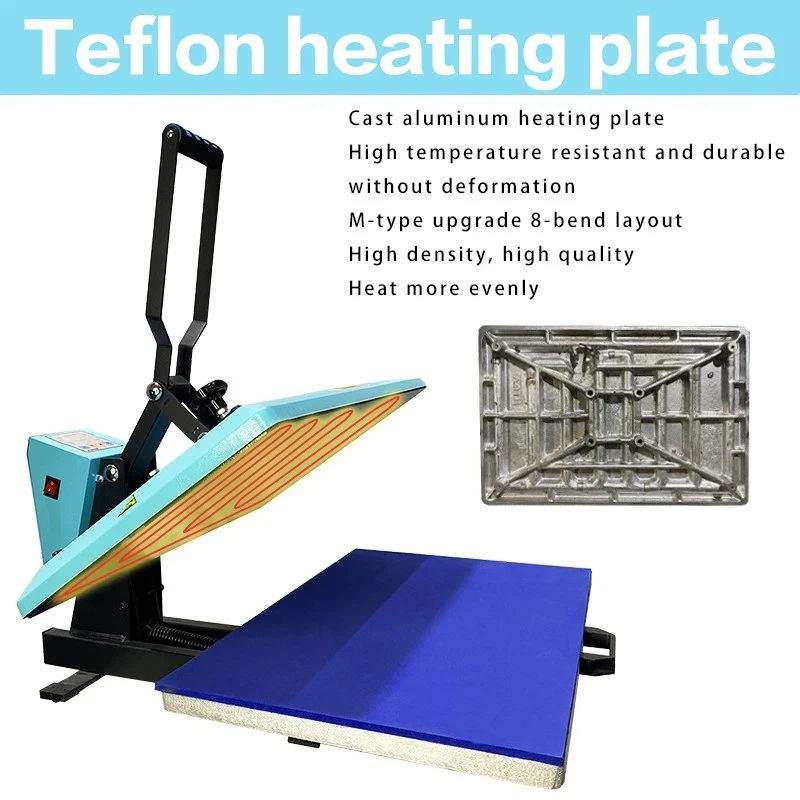
Certainly! Here's a revised version of the features list: 1. Precise digital time and temperature controls for accurate operation. 2. Upper platen coated with non-stick Teflon for easy cleaning and maintenance. 3. Compact clamshell design to optimize space and facilitate effortless operation. 4. Leveraged pressure system designed to enhance efficiency and reduce user exertion. 5. Adjustable pressure settings to accommodate a variety of materials and thicknesses. 6. User-friendly interface with easy handling, programming, and operation for seamless use.
Heat presses come in three primary types: clamshell, swing-away, and draw. Each option features a unique style while employing the same fundamental functions as the others.
Clamshell Heat Press
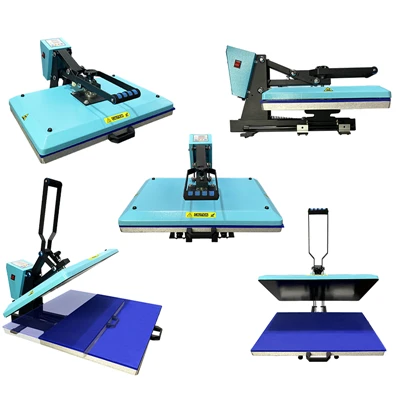
Clamshell heat press machines open like a clamshell, secured at the back to open the press at around a 70-degree angle. The lower platen remains fixed, while the upper platen opens at an angle. The straightforward design makes these presses easy to operate and quick to use.
These models are perfect for crafting custom items out of fabrics, including T-shirts, blankets, and hoodies. They can also work well for low-profile items, like flat keychains.
Swing-Away Heat Press
Swing-away heat press machines feature an upper platen that lifts and swings away from the lower platen. Unlike the clamshell machines, this type doesn't open at an angle, lifting straight away from the lower platen.
The upper platen easily pivots out of the way for reloading, and since it doesn't hover above your hands while you set up your next transfer, it's easier and safer to use.
This type of press is ideal for thicker items, including sublimation photo tiles or award plaques, as the design works well for this purpose.
Draw Heat Press
The draw heat press machine or slide-out drawer heat press features the best of both worlds. It offers the quick, easy functionality of the clamshell heat presses with the handy benefits of the swing-away model.
However, this model boasts a mobile lower platen instead of featuring a swiveling or angled upper platen. Instead of remaining fixed, it slides in and out of the heat press like a drawer, allowing you to reload and set up your next transfer quickly.
This machine works well for various materials, from thinner fabrics to thicker plaques.
Advantages of Heat Transfer Printing For Print Shop Business Owners
Versatility in design and customization options: Heat transfer printing allows for intricate and vibrant designs, including photographs and complex patterns. It offers endless possibilities for customization, catering to the diverse preferences of your customers.
Cost-effectiveness and low setup costs: Compared to traditional methods like screen printing, heat transfer printing requires minimal setup costs and is ideal for small to medium-sized print shops. It eliminates the need for expensive screens and reduces labor-intensive processes.
Ability to print on a wide range of materials: Heat transfer printing is compatible with various substrates, including cotton, polyester, blends, and hard surfaces like ceramic and metal. This flexibility expands your market reach and opens doors to new revenue streams.
Quick turnaround times and efficient production process: With heat transfer printing, you can achieve fast turnaround times, fulfilling urgent orders and meeting customer expectations. The streamlined production process minimizes downtime and maximizes efficiency.
Durability and longevity of heat transfer prints: Heat transfers are known for their durability and resistance to fading, cracking, and peeling. The prints withstand repeated washings and maintain their vibrant colors, ensuring customer satisfaction and long-lasting results.
Can A Heat Press Be Used For?
There are various methods by which a heat press can be used. Below, we discuss some of the most popular applications for heat presses.
Screen-printed transfers
This is a process in which you take your design, print it onto a special piece of paper, and then use a heat press to transfer the design onto the garment. This is a popular method for printing t-shirts because it's relatively simple and doesn't require a lot of specialized equipment.
Cure Plastisol Inks
Plastisol ink is a thick, gooey substance that needs to be heated in order for it to turn into a solid. This is why a garment must go through a heat press in order for the ink to adhere properly to the fabric. The duration and temperature will depend on the garment material as well as the type of ink being used.
Vinyl Transfers
Another way to embellish garments without having to do any printing yourself is by using heat transfer vinyl. As with screen-printed transfers, all you need is a design, a vinyl cutter, and of course, a heat press. You simply cut out your design from a sheet of vinyl, weed away the excess, and then apply it to the garment with a heat press.
Sublimation
Sublimation is a printing process that uses heat-sensitive inks. The inks are first printed onto a sheet of transfer paper and then transferred to the desired substrate using a heat press. This printing method is often used for polyester garments as well as ceramic mugs and plates.
Appliqués
Appliqués are simply fabric patches that are applied to garments – they can be either sewn on or glued on. If you're going to be using glue, you'll need to use a heat press in order to properly adhere the appliqué to the garment.
Direct-to-garment printing
Direct-to-garment (DTG) printing is a process in which ink is printed directly onto different materials. This printing method has become increasingly popular over the past few years, and as a result, there are now many DTG-specific heat presses on the market.
If you're considering purchasing a heat press, various features and functionalities are worth evaluating. Here are some key considerations:
1. What will I use this for? Is it for a hobby or a large-scale business?
2. What size heat press do I need? Ensure it fits your most common printing tasks.
3. What type of heat press work well with my design? Opt for a machine with digital timer and temperature settings for precision.
4. How thick or thin are my garments? Different machines cater to varying fabric thicknesses.
5. If it's for business, or for bulk printing, you might need to think for both quality and efficiency.
Temperature and timer controls: Heat and time are critical components of successful heat transfer applications. While a manual heat press machine is less expensive, a digital timer and temperature are preferable for precision and longevity.
Pressure adjustment: Too much pressure results in darker color, whilst too little pressure may necessitate discarding the items and redoing. Knowing what kind of garment materials you're working with and how much pressure you need to apply is critical. An automated pressure adjustment is preferable.
Platen size: A standard platen usually measures 15x15 inches. The larger platen will allow you to work with more objects. Custom platens vary in size and shape, and some machines require additional tools to alter the lower platen. It is critical to locate a flexible provider.
Efficiency is vital when working with a big volume of heat transfer applications. For large-scale production, automatic heat transfer equipment is always preferable.
A heat press is an invaluable tool in the heat printing industry, suitable for both commercial and B2B settings. Although these machines are competitively priced and user-friendly, achieving optimal heat printing results demands precise temperature, time, and pressure adjustments. When considering the purchase of a heat press machine, it is advisable to prioritize quality over price. It is important to be cautious of potential issues that may arise in the future if one chooses to pay less initially.
How to Use a Heat Press Machine For T-shirt Printing?
Ever wondered how to heat press? It's actually pretty simple and to be honest, anyone can do it, pretty much anywhere! From your home to a full-on production warehouse, the job can be done. We'll cover everything you need to know about how to use a heat press machine for t-shirt printing.
Grab Your Chosen High-Quality Image
If you're going to create multiple sized designs, we recommend using a software that works with vectors rather than bitmap (pixels). This is because it'll keep your quality at the best visuals. An example of this software is Adobe Illustrator.
(If you're printing on a light-coloured garment, reverse/mirror your image using the tools on your selected application. Dark garments don't need the white surface and DO NOT need reverse-image printing).
Print Your Chosen Image on the Transfer Paper
Now that your design is ready, place the transfer paper where you would usually place your printer paper. But be sure to double check you're happy with the quality. Also make sure the design will fit on your t-shirt. To print, you'll need either an inkjet printer or laser printer. We recommend inkjet as the best type of printer to use for colour photos.
Turn On Your Heat Press
A heat press can take time to heat up – it's not an immediate set-up. Therefore, we recommend you turn on your heat press and set it to the required temperature well before you're ready. Select a temperature between 155-165ºC. (you might notice the temperature fluctuates slightly when it has been set, but that's normal).
Cut Out Your Designs Accurately
If you'd like a really precise cut like me, I personally recommend a craft knife. You can cut it very finely or leave a bit of space around the edges. We recommend leaving at least an inch so you don't risk cutting through the design. You can also use the edges as guidelines when placing the design on the t-shirt.
Remove Creases From Your T-shirt
Place your t-shirt on the heat press and set the time to 6 seconds to ensure you have removed all the creases, so you have an even and accurate view of where your design will go. If you leave creases, they will show in the design. (Just so you know, transfers by Innotex don't need pre-pressing)! If your heat press still hasn't been set up to the temperature at this point, don't worry. Since you're just removing creases, you just need to set the time and start the machine.
Place Your Design On Your T-shirt
Now you need to identify where you intend to have your design. If you're using a light-coloured garment, place your design face down. If your garment is dark-coloured, place your design face up. This will make sure the final result is not a mirror image.
Heat Press On the T-Shirt
Simply double-check time and temperature on your heat press and once you're happy, hit the start button. The machine will begin the process and start to transfer the design from the paper to the t-shirt. Once this process is complete, remove the t-shirt from the heat press and leave it on a flat surface.
Remove The Transfer Paper
Since we're working with a hot peel transfer, you can slowly peel the transfer paper immediately. Just be careful as it may be hot to the touch! Peel from one corner and pull away from yourself. Don't peel towards yourself simply because it'll restrict your view.
Our Factory
MYCUT is a leading brand for screen protector cutting machine under Huansheng Intelligence (Shenzhen) Co., Ltd. We are National High-Tech Enterprise located in the city of design-Shenzhen in South China and passes ISO9001:2015 authentication. Our own Huansheng Science and Technology Park is with over 10,000 square meters and more than 120 workers. Worked in vinyl cutter industry since year 2004 and developed the brands "MYCUT" & "TALENT" from year 2015, MYCUT vinyl cutters are well known all over the world with integrated design carriage head & honeycomb aluminum structure, which assure the highest precision and reliability. All of MYCUT screen protector cutting machines and cutting plotter are with CE and RoHS certificates, and FCC compliant. Our factory complies with ISO9001: 2015 quality control as the production standards.

FAQ
Hot Tags: 16x20 heat press, China 16x20 heat press manufacturers, suppliers, factory, Make Your Own Card Butterfly Paper Cutter Best Craft Cutter, solo craft cutter, homemade cards, make your own card, craft circle cutter, small die cutting machine
Previous
Heat Stamping Machine All in OneNext
16x20 Heat PressSend Inquiry